




At a time when global industrial chains and innovation networks are undergoing profound restructuring, business education is being called upon to shoulder a broader and more strategic mission. It is no longer sufficient merely to update knowledge or enhance skills. What is increasingly essential is to enable students to step beyond the classroom and into the very arenas where opening-up, scientific and technological transformation, and industrial upgrading are unfolding, so that they may come to understand China, innovation, and the future through direct engagement with the realities of contemporary development.
In March 2026, Asia Europe Business School (AEBS) of East China Normal University (ECNU) organized a field-based teaching program in Sanya, Hainan, for students enrolled in the 2025 Master of International Business (MIB) cohort. During the program, students visited the Sanya Yazhou Bay Science and Technology City and conducted in-depth academic visits to research platforms affiliated with the ECNU Hainan Research Institute. For AEBS, this was not simply an extension of classroom learning; rather, it was a vivid and substantive “China field classroom” designed for international students. Through immersion in real-world settings, students were enabled to experience the vitality of China’s high-standard opening-up, to better understand the mutually reinforcing relationship between scientific and technological innovation and industrial development, and to observe how China is forging new pathways of engagement and connectivity with the wider world.
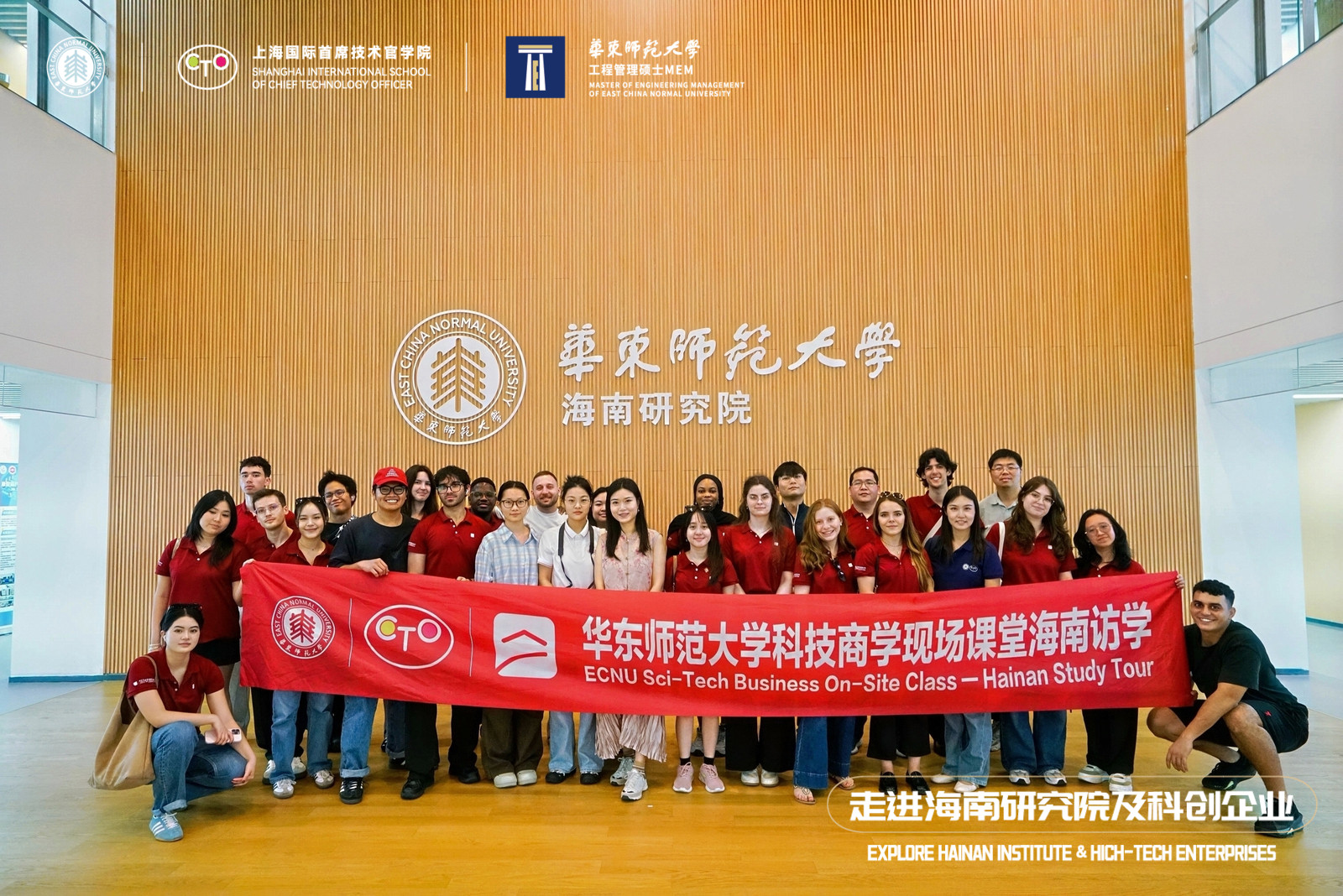
Over the course of just a few days, students entered the forefront of Hainan Free Trade Port development, observed at close range the innovation ecosystem emerging in the context of China’s opening-up, and gained first-hand exposure to frontier fields including deep-sea technology, green and low-carbon development, precision optics, and marine carbon sequestration. For MIB students, such learning carries particular significance. International business today is no longer confined to an understanding of trade rules, market access, or cross-border circulation. Increasingly, it demands an understanding of how technological progress reshapes industries, how opening-up connects markets and societies, and how innovation is redefining the trajectory of future development.
This was not a visit in the ordinary sense. It was a mobile classroom unfolding at the forefront of China’s opening-up, scientific and technological advancement, and international cooperation. What it reflects is precisely the educational philosophy that AEBS has consistently upheld: not to confine students’ understanding of international business to textbooks and classrooms, but to bring them into the living realities of the world, so that they may grasp industry, cooperation, and the future in those arenas where China’s interaction with the world is most dynamic and consequential.

Entering the Frontier of
China’s Opening-Up
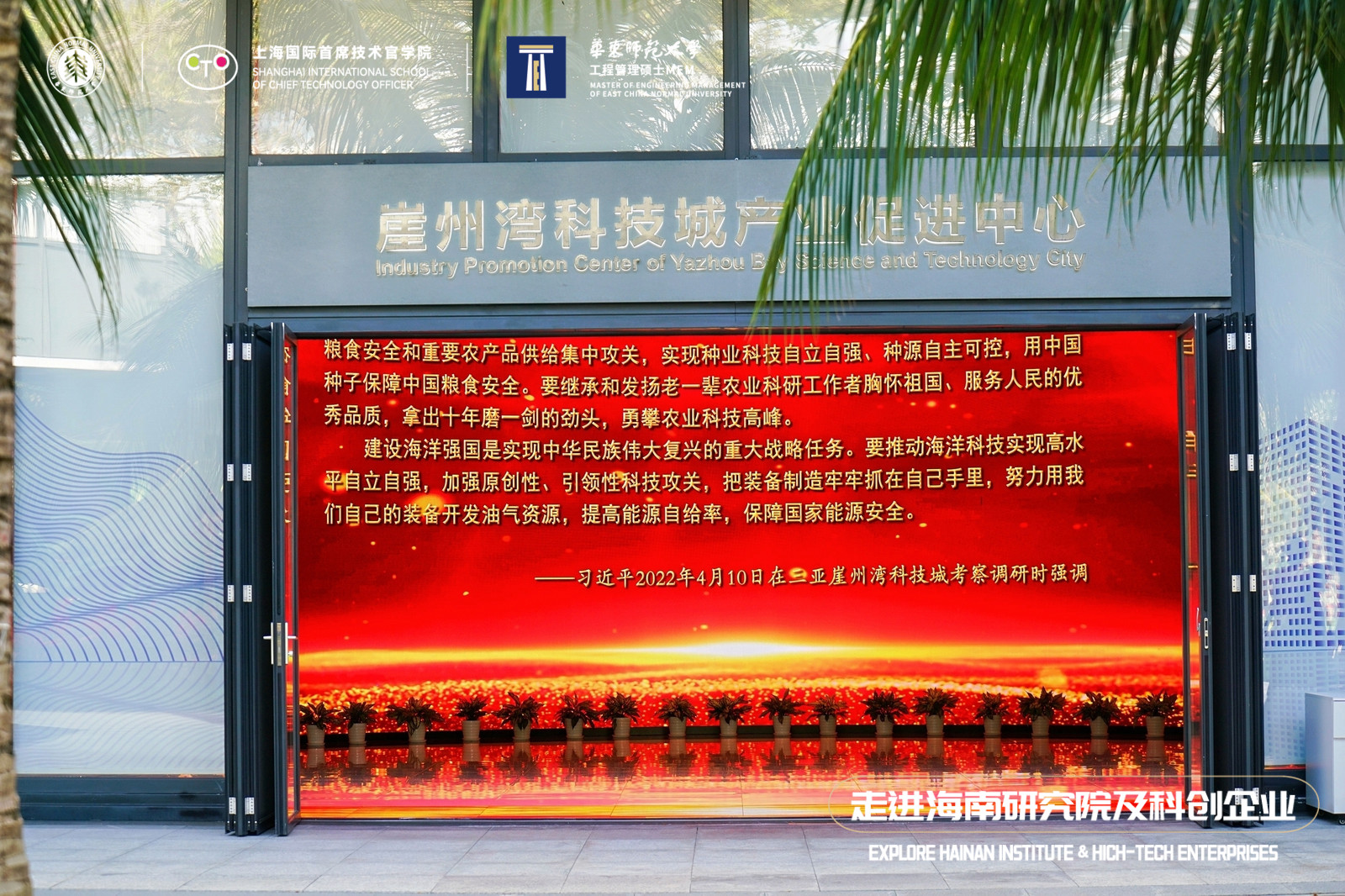
Sanya Yazhou Bay Science and Technology City is an important innovation highland in the development of the Hainan Free Trade Port and a significant window through which to observe China’s continued efforts to expand high-standard opening-up. As the development of the Free Trade Port advances, the area is steadily emerging as an important platform for open cooperation, institutional innovation, scientific and technological agglomeration, talent mobility, and industrial synergy. For AEBS’s international students, to enter such a place is to encounter not abstract policy narratives, but a vivid picture of how China translates openness into development momentum and transforms exchange into innovation opportunities through platform building, institutional improvement, and international cooperation.
What students encountered in Yazhou Bay was an open and innovation-driven community that is continuously deepening its links with global resources. Drawing on its strategic location, scientific research strengths, and enabling environment for openness, the Science and Technology City has steadily expanded its international cooperation networks, attracted high-level research platforms, leading talent teams, and global innovation resources, and promoted the deep integration of innovation chains, industrial chains, capital chains, and talent chains. From the development of international cooperation platforms to the arrival of leading enterprises and university-based research forces; from the strengthening of service mechanisms for international talent to the cultivation of an environment conducive to multicultural exchange, Yazhou Bay presents a living scene of Chinese innovation that is more open, more confident, and more proactive in engaging in global cooperation.
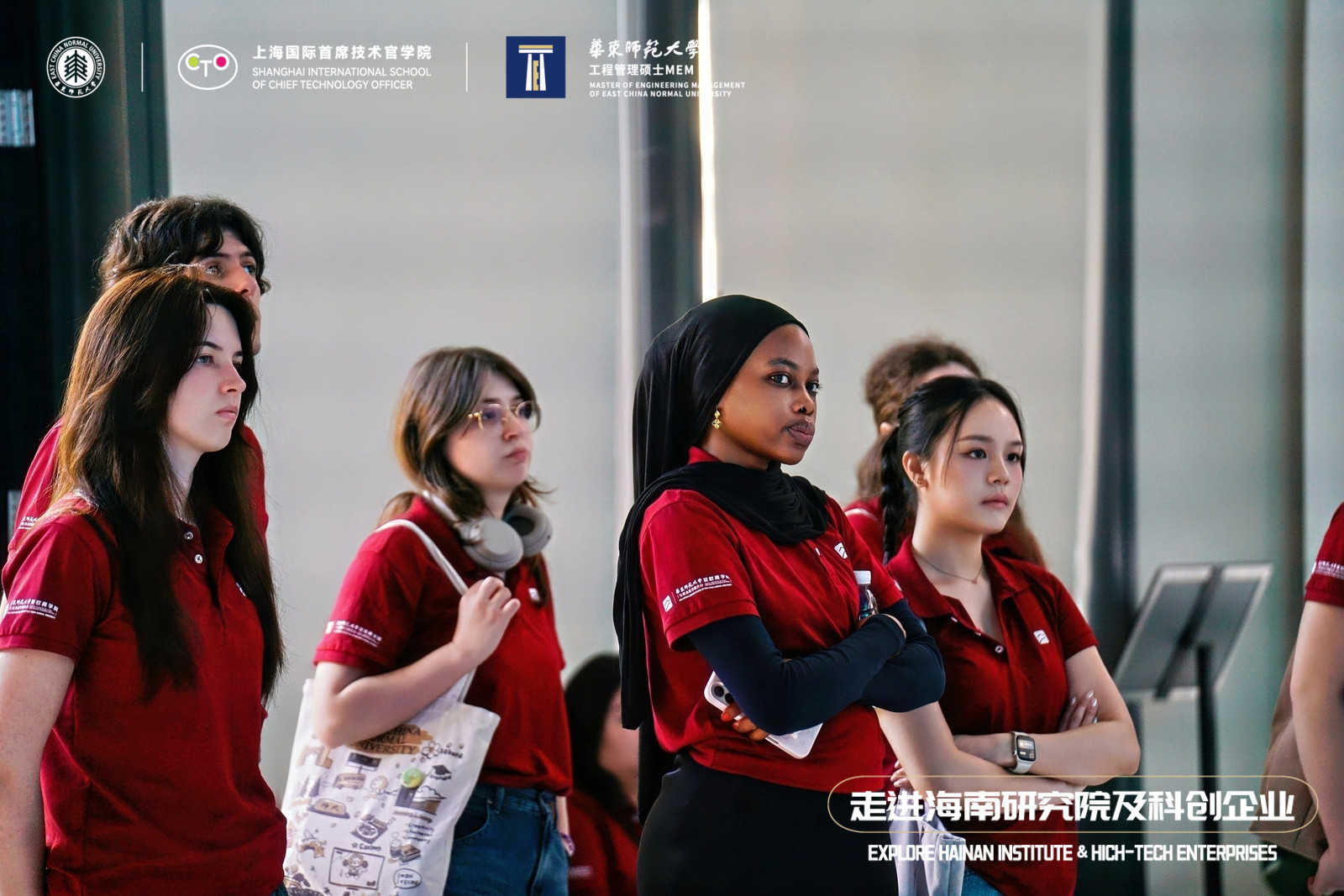
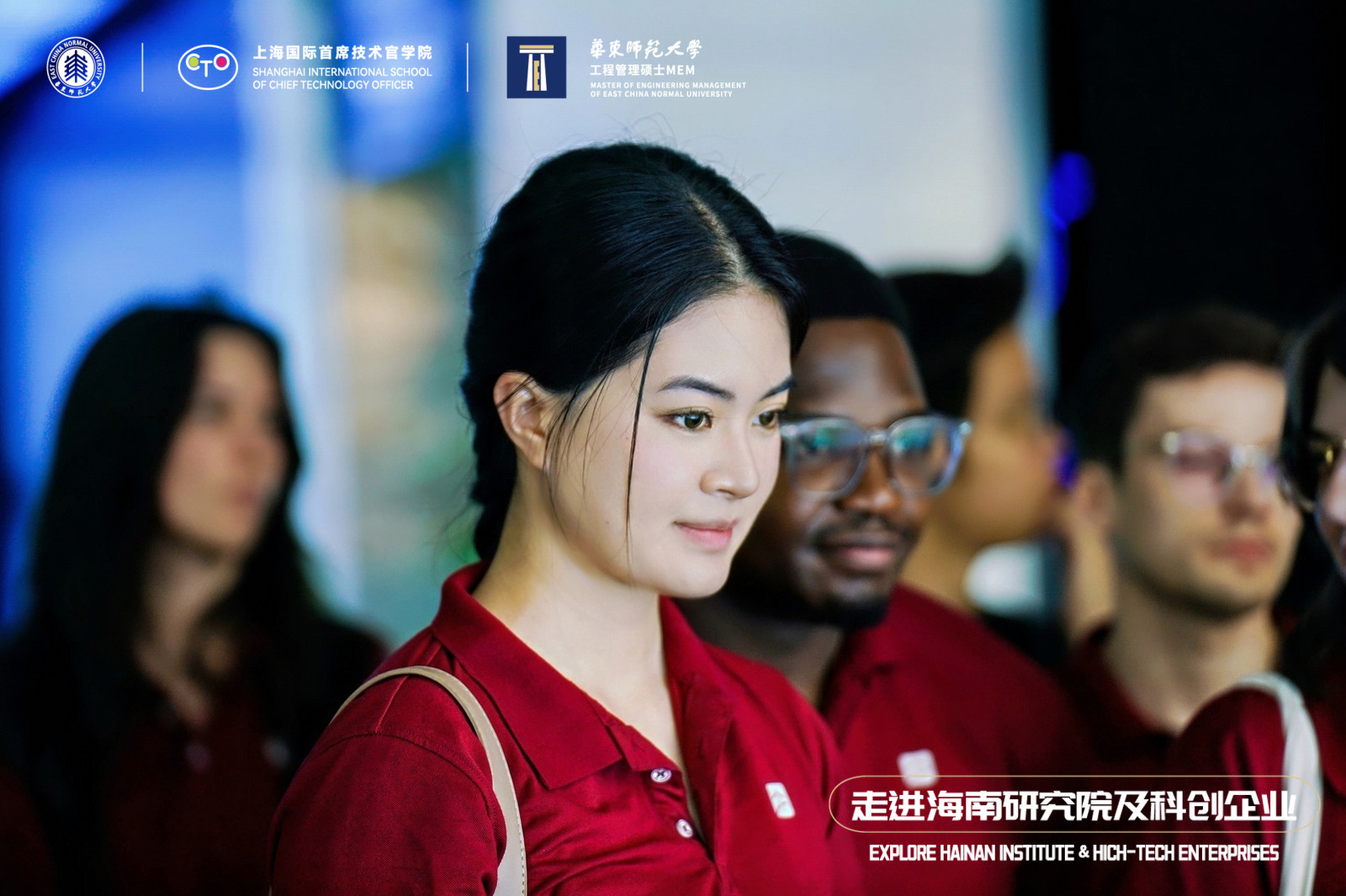
For international students, the value of such a field visit is immediate and instructive. In today’s world, global business competition is no longer merely a contest of products and markets. More and more, it is becoming a competition in innovation capability, collaborative capacity, resource integration, and cross-cultural understanding. Business talent with genuine future competitiveness must not only understand the language of commerce, but also appreciate how technology shapes industrial transformation, how China participates in the restructuring of global value chains through opening-up, and how cooperation and exchange operate in practice across different countries, cultures, and institutional environments. It is precisely here that the significance of AEBS’s educational approach becomes evident: through educational innovation, it seeks to advance the deep integration of scientific and technological innovation with industrial innovation, thereby equipping students with the capacity to engage a rapidly changing world.
Entering Research Platforms
If Yazhou Bay Science and Technology City enabled students to see how openness, cooperation, and innovation ecosystems reinforce one another, then the research platforms affiliated with the ECNU Hainan Research Institute further demonstrated how Chinese universities are responding to real-world challenges through research-driven innovation and transforming scientific exploration into development pathways of greater industrial value and broader social significance.
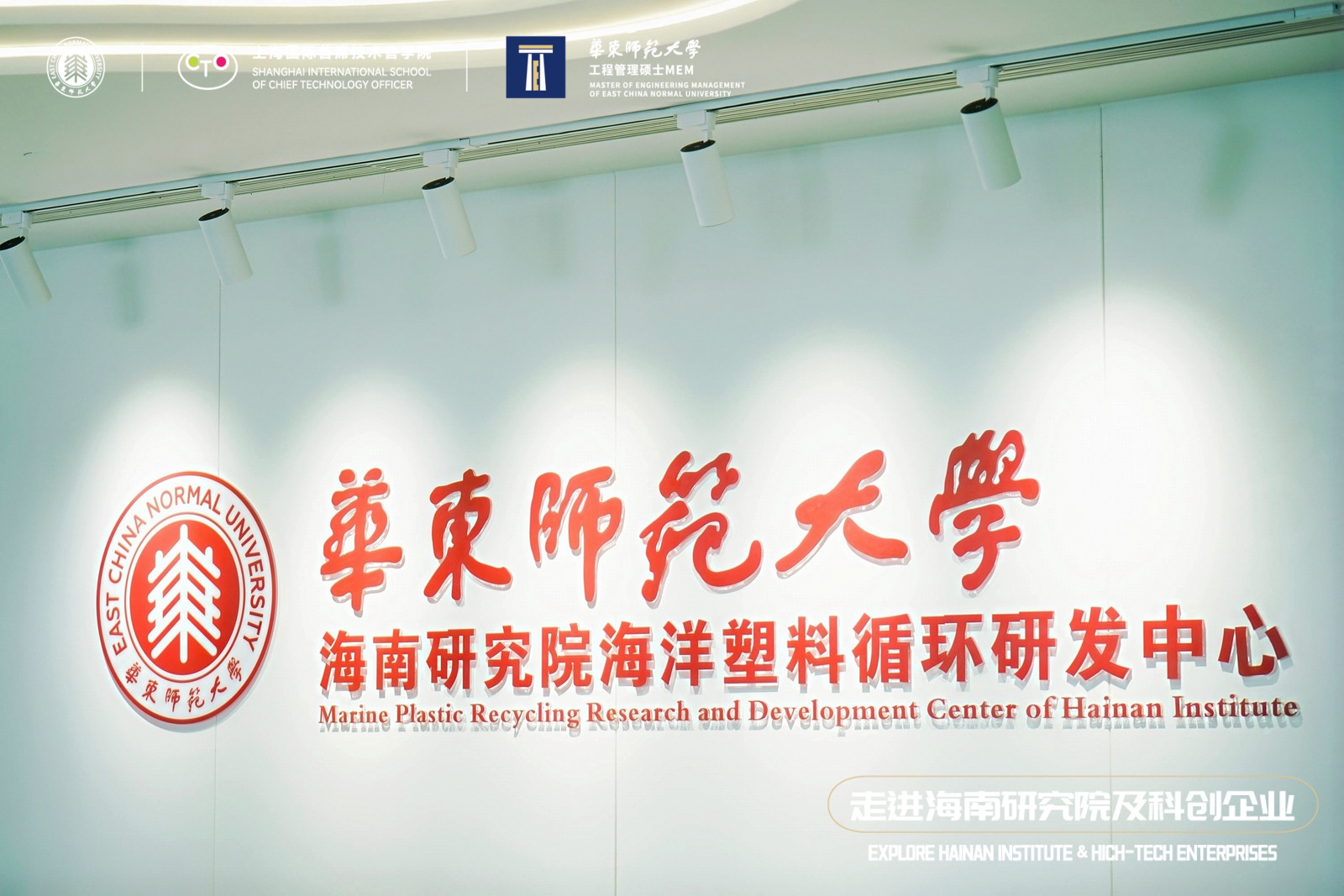
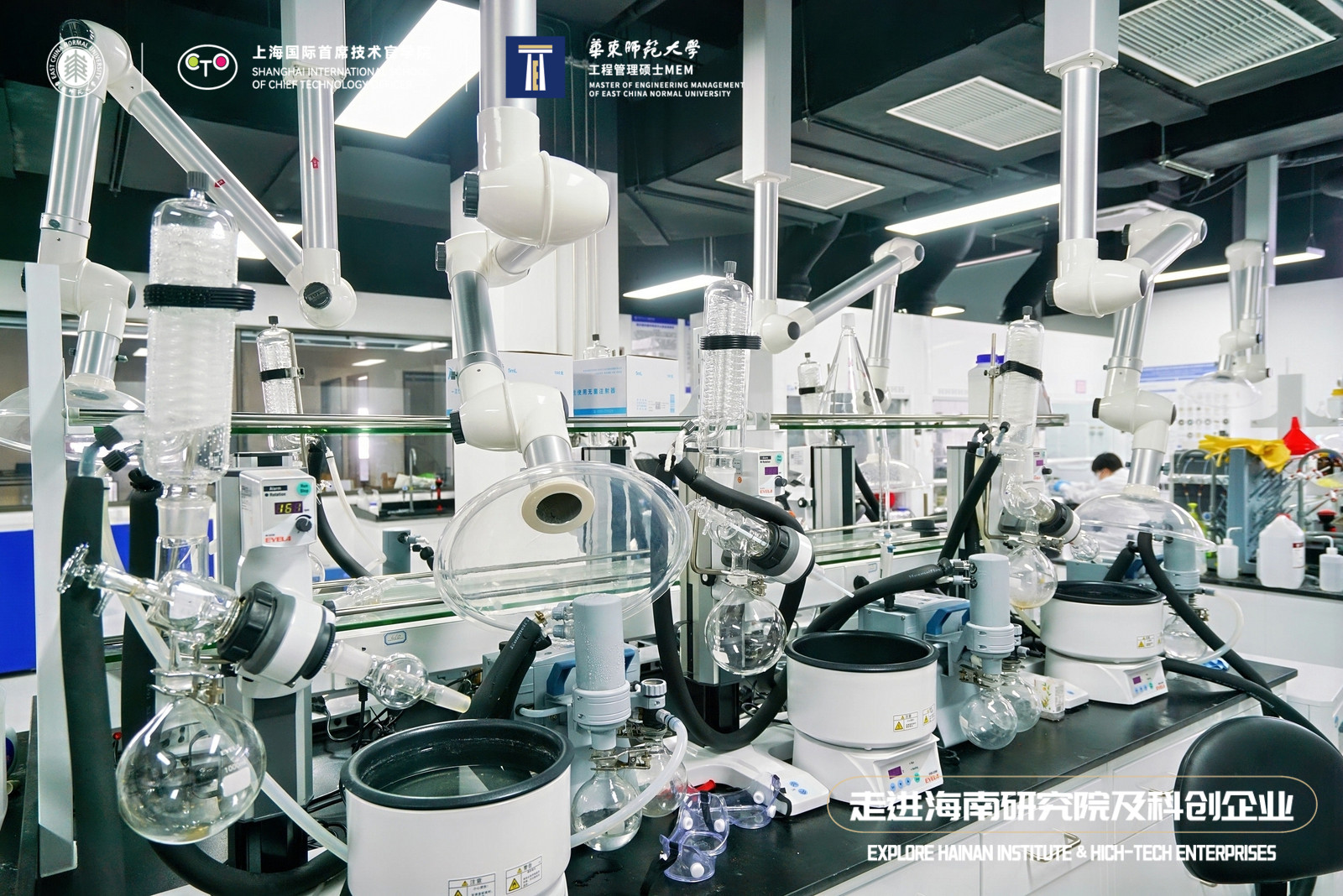
At the ECNU Marine Plastic Recycling Research and Development Center, students gained in-depth knowledge of the University’s frontier research in the efficient resource-oriented recycling of waste plastics. Drawing on the strengths of national key laboratories, the Center carries out integrated research in such areas as marine pollution control, green hydrogen production from seawater, and the development of automated and intelligent instrumentation for the plastics recycling industry. In particular, its work on photocatalytic plastic degradation solutions and process development offered students a more concrete understanding that scientific innovation is not merely about the accumulation of laboratory outcomes, but about whether research can respond to global challenges of common concern and generate solutions with real-world application value.
At the ECNU Marine Precision Optical Instruments Research and Development Center, students were introduced to work at the cutting edge of precision spectroscopy and quantum sensing. The research team has established an experimental platform with international competitiveness and is focusing on key directions including ultrafast laser control technologies, marine molecular fingerprint spectroscopy, and infrared photonic detection, continuously enhancing the precision and capabilities of marine optical sensing. For MIB students, such a visit was not simply an exercise in “seeing research.” More importantly, it offered a deeper understanding that future global competition will increasingly manifest itself in the form of competition in scientific and technological capability, innovation organization, and the commercialization and transformation of research outcomes. For international business professionals, without an understanding of how technology generates industrial advantage and international competitiveness, it will be difficult to truly enter the core arena of the future global business landscape.
At the ECNU Marine Carbon Sequestration Research Center, students explored research addressing frontier questions concerning global climate change and the marine carbon cycle. Focusing on the scientific, monitoring, and governance needs related to marine carbon sinks, the Center conducts research in such areas as blue carbon ecosystem assessment, carbon enhancement pathways and technologies, and intelligent quantification and monitoring. What is presented here is a quintessential setting of interdisciplinary innovation, where marine science, ecological protection, engineering technology, data intelligence, and resource governance intersect and converge toward future-oriented global issues under the broader agenda of green and low-carbon development. For international business students, such a setting is equally instructive. Fields such as green transition, sustainable development, marine technology, and intelligent monitoring are continuously reshaping the global industrial landscape and giving rise to new forms of cooperation, new business models, and new spaces for international exchange.
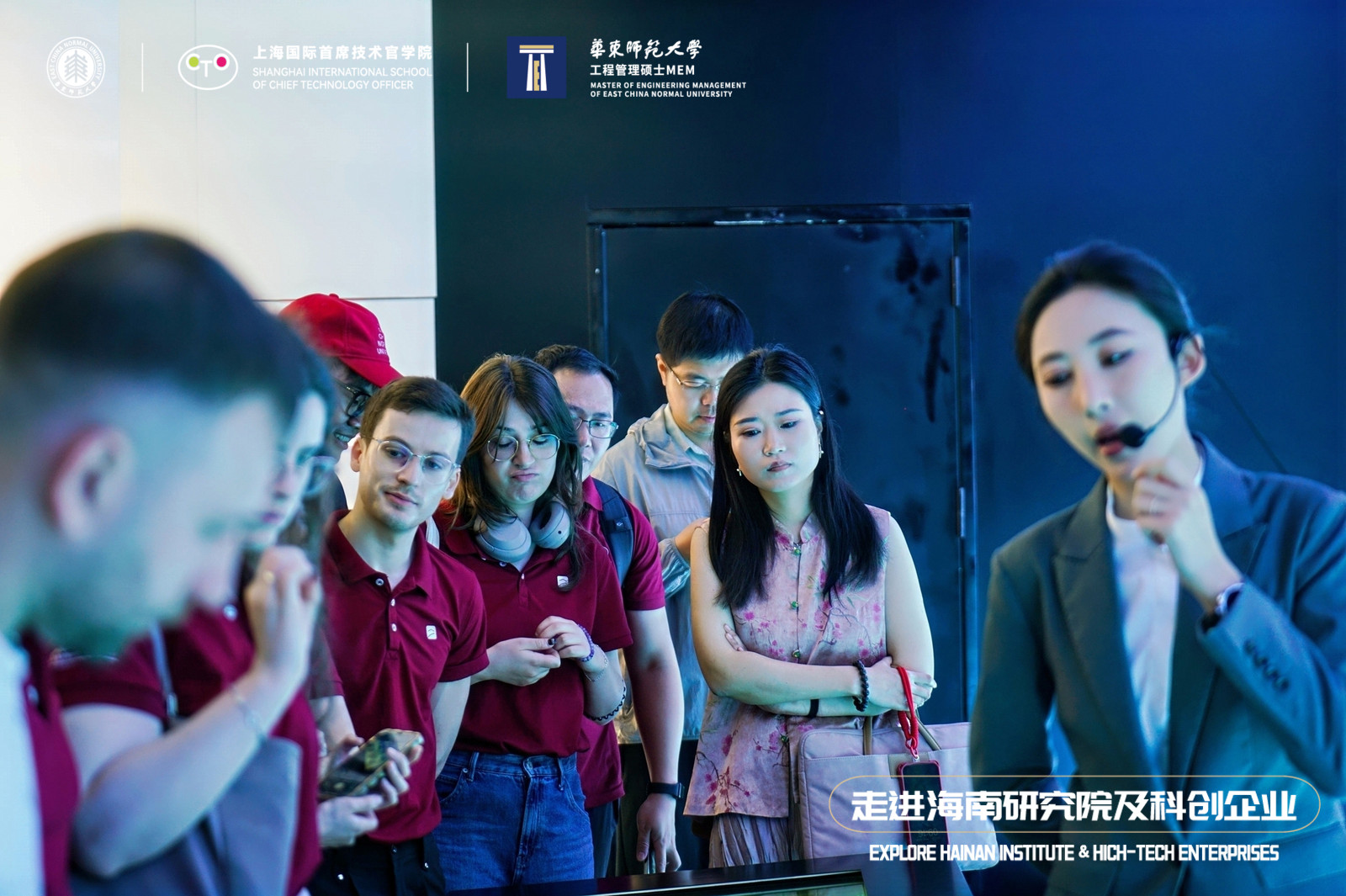
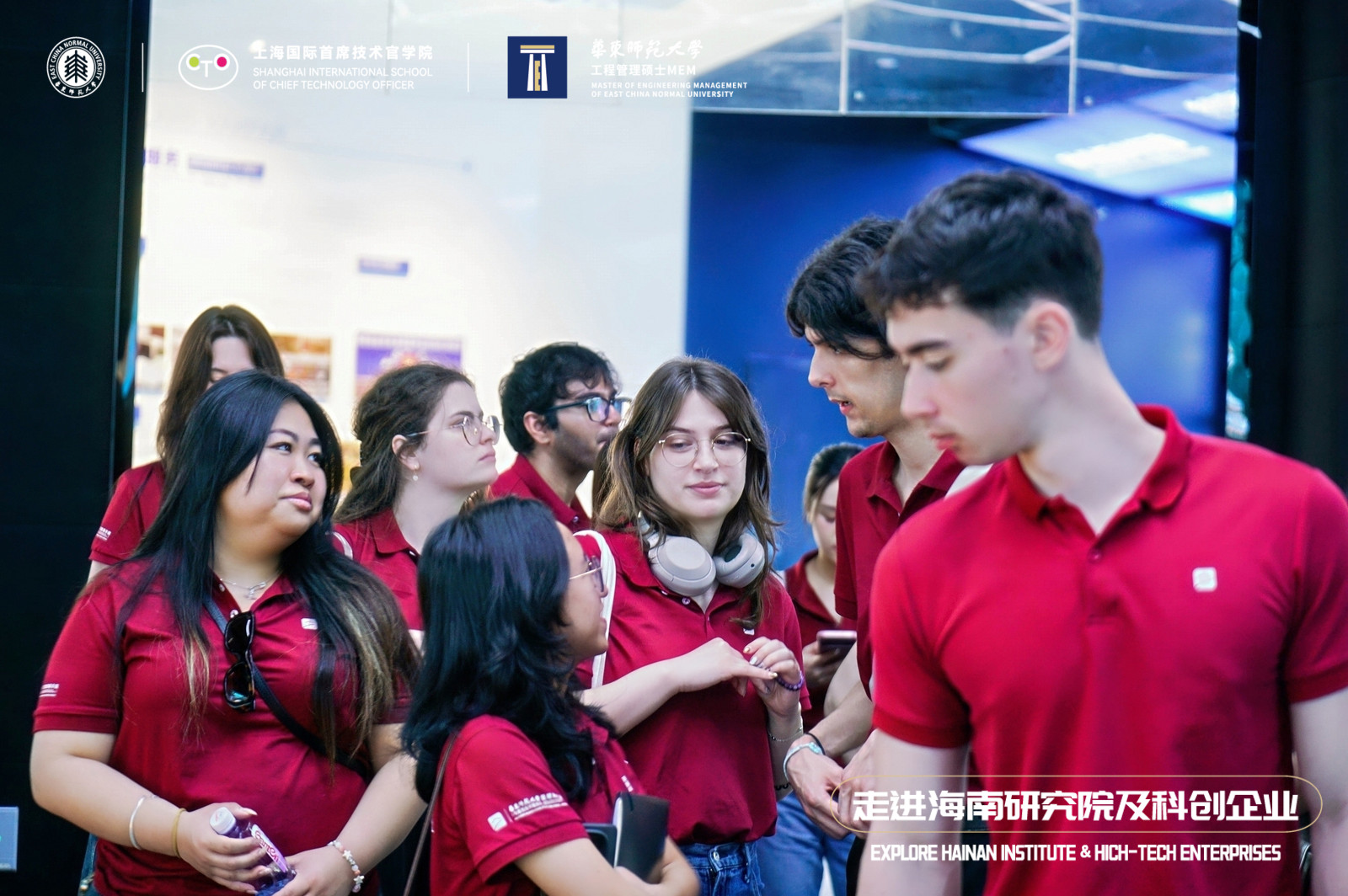
From the Science and Technology City to research platforms, and from open innovation ecosystems to frontier technologies, this field-based study enabled students to gain a more concrete understanding that what is meant today by the “deep integration of scientific and technological innovation with industrial innovation” concerns not only the upgrading of particular industries, but also how a country engages the world at a deeper level, how it strengthens its capacity for innovation and development amid global competition, and how it builds new pathways for exchange and cooperation. For international business talent, to understand this integration is, in essence, to understand the emerging language of the future world economy.
Rooted in the ECNU and AEBS Platforms: Understanding a More Authentic China through Internationalized Education
What lent particular depth and significance to this Hainan field-based teaching program was not only the fact that students entered the forefront of China’s opening-up and scientific innovation, but also the institutional foundation that made such a program possible: ECNU’s strong comprehensive educational capacity, robust research strengths, and distinctive international vision in talent cultivation.
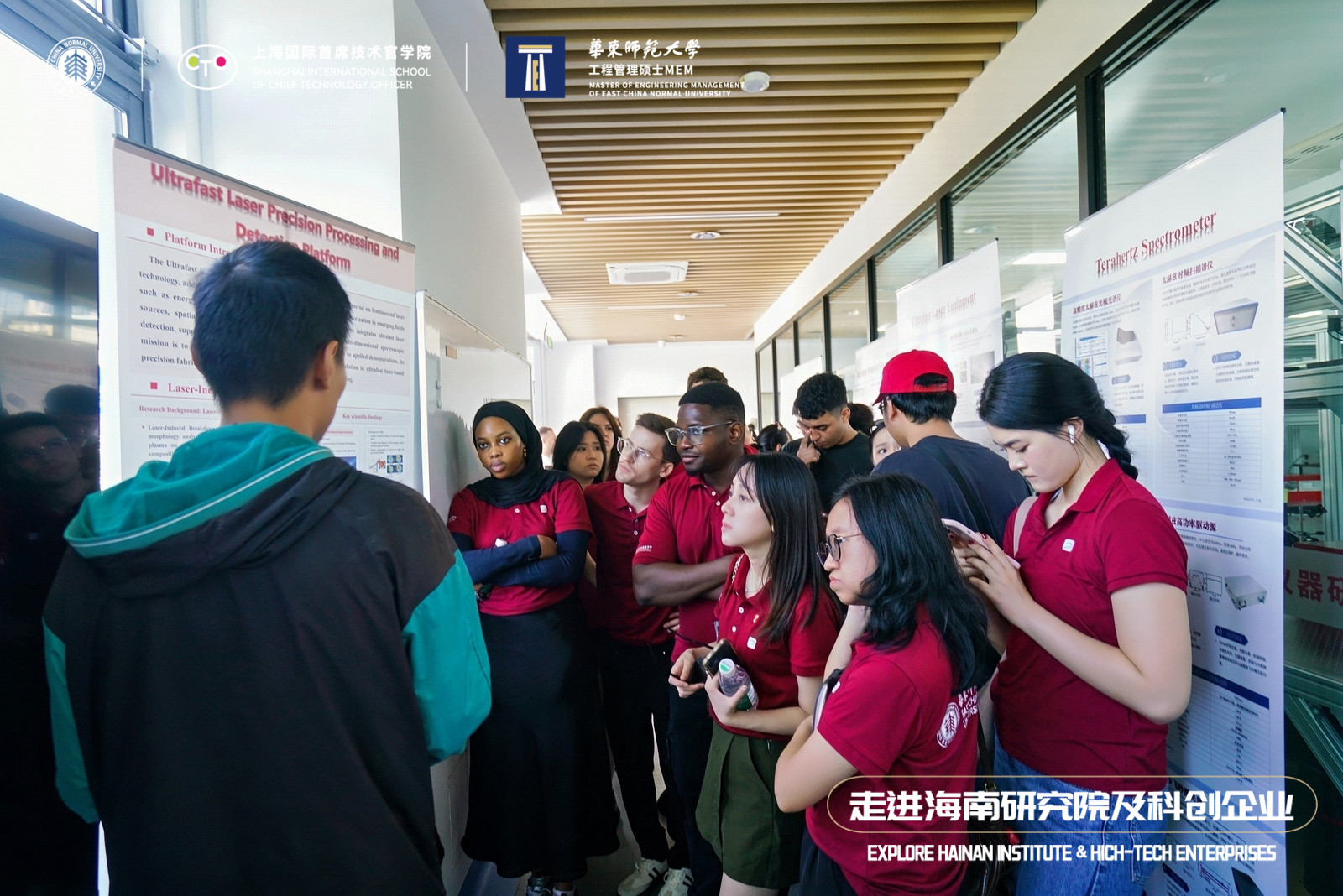
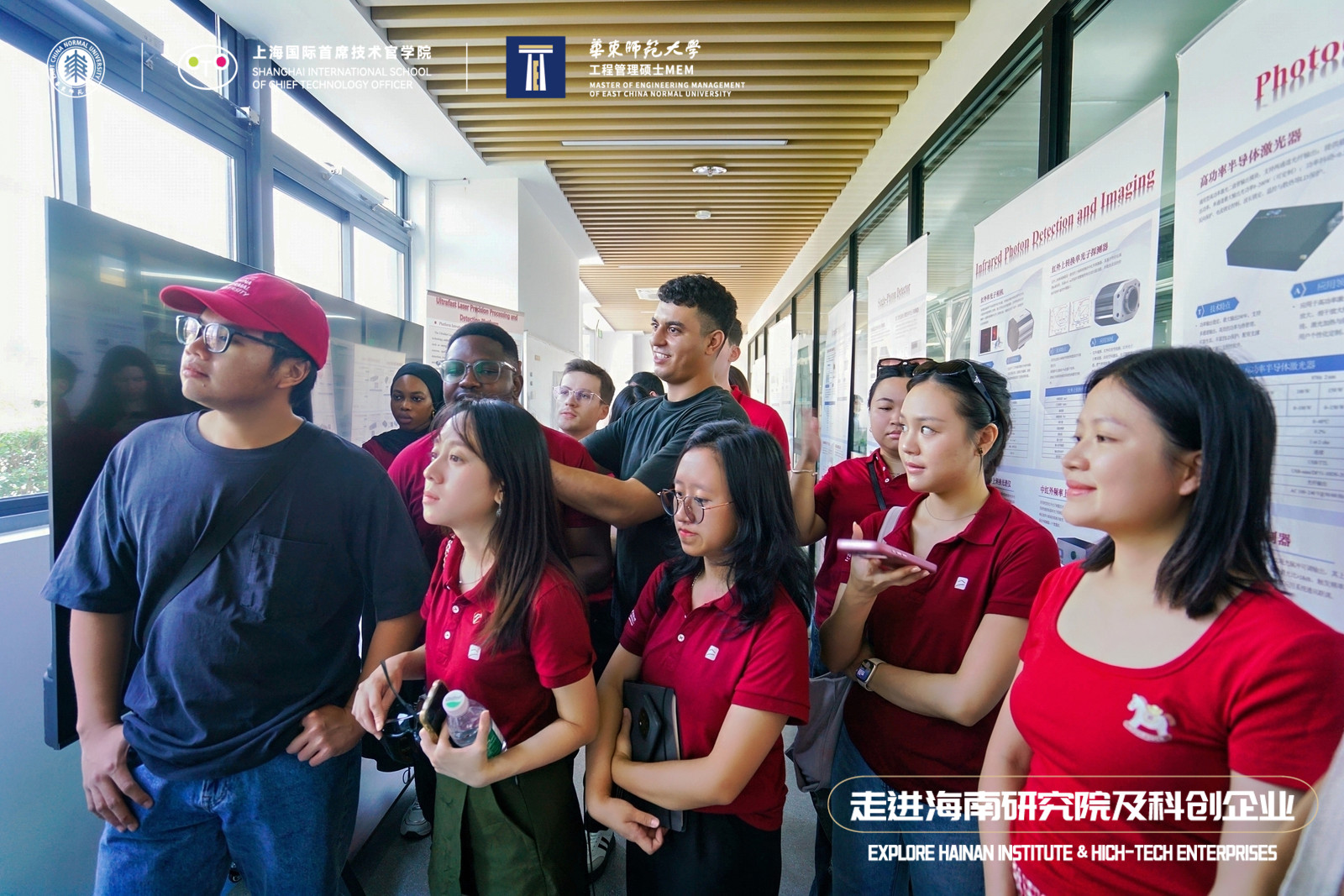
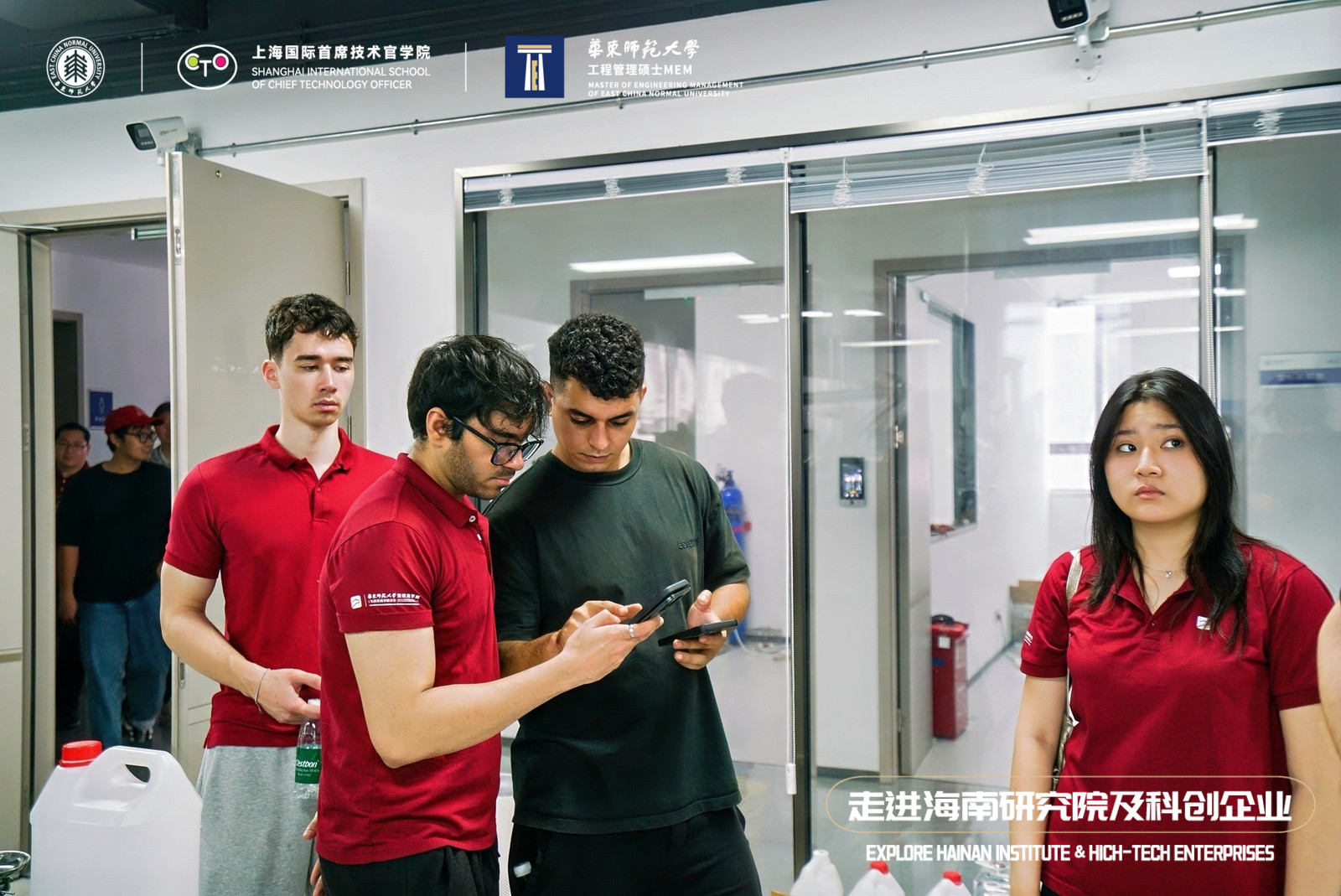
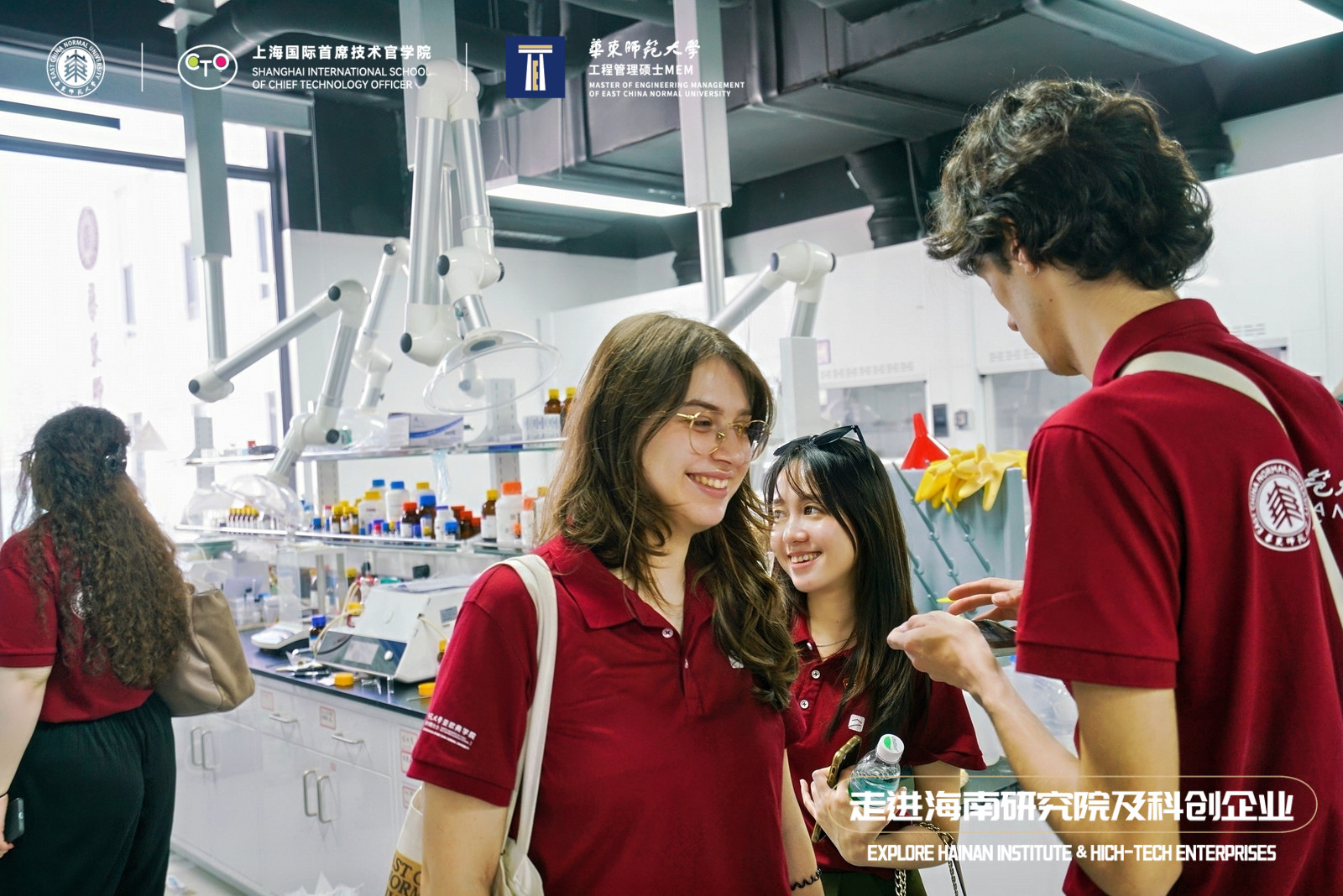
As a high-level comprehensive research university, ECNU combines a profound humanistic tradition with a solid academic foundation. At the same time, it continues to leverage its strengths in scientific research, institutional platforms, and international exchange to provide students with learning scenarios that are more multidimensional, more authentic, and more future-oriented. It is precisely this foundation as a comprehensive research university that enables the University to meaningfully integrate education, research, open platforms, and international resources, thereby allowing students to move beyond the classroom and into the living realities of China’s development.
The distinctive value of AEBS, in turn, lies in its sustained commitment to cultivating internationally minded and interdisciplinary business talent capable of understanding China, connecting with the world, and engaging the future. International business education should not remain confined to textbooks and case analyses; rather, it should enable students to understand the practical logic of China’s economy, innovation, cooperation, and international exchange within the real settings of opening-up and development. This journey to Hainan constituted a concrete embodiment of AEBS’s philosophy of internationalized education: bring the classroom to the frontier of China’s opening-up and development, and enable students to rethink the boundaries and future of international business at the intersection of scientific and technological innovation, industrial transformation, international exchange, and cooperative interaction.
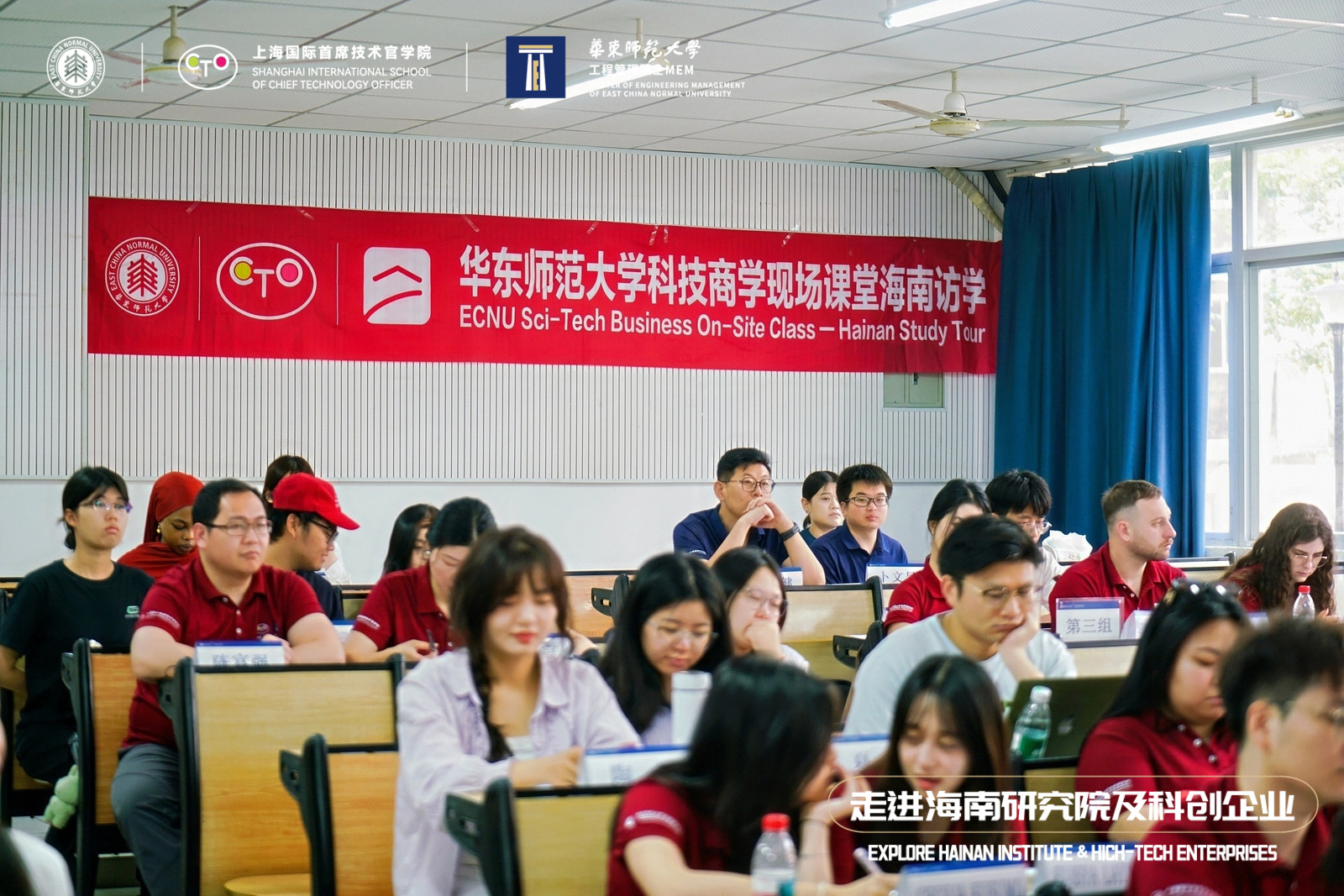
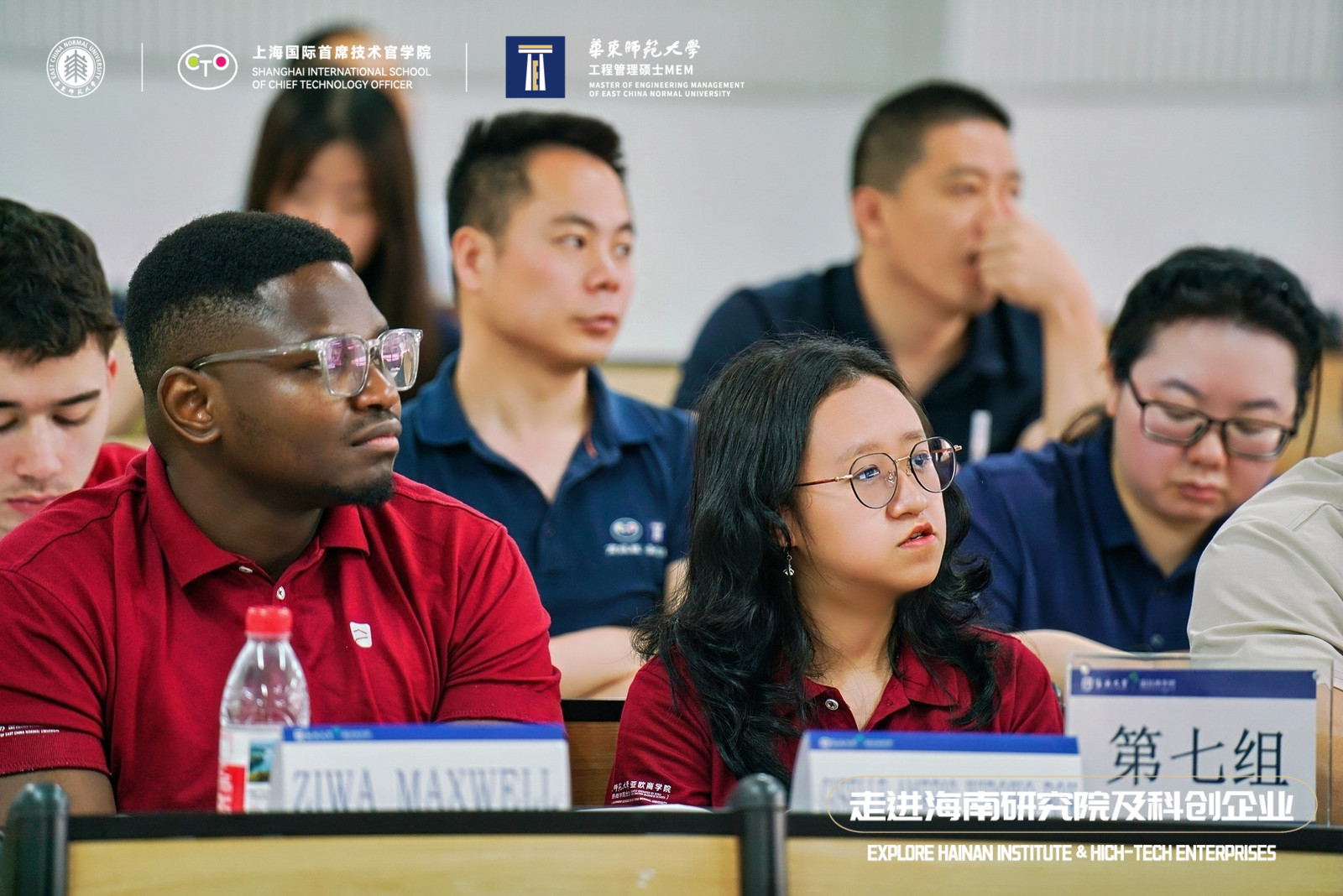
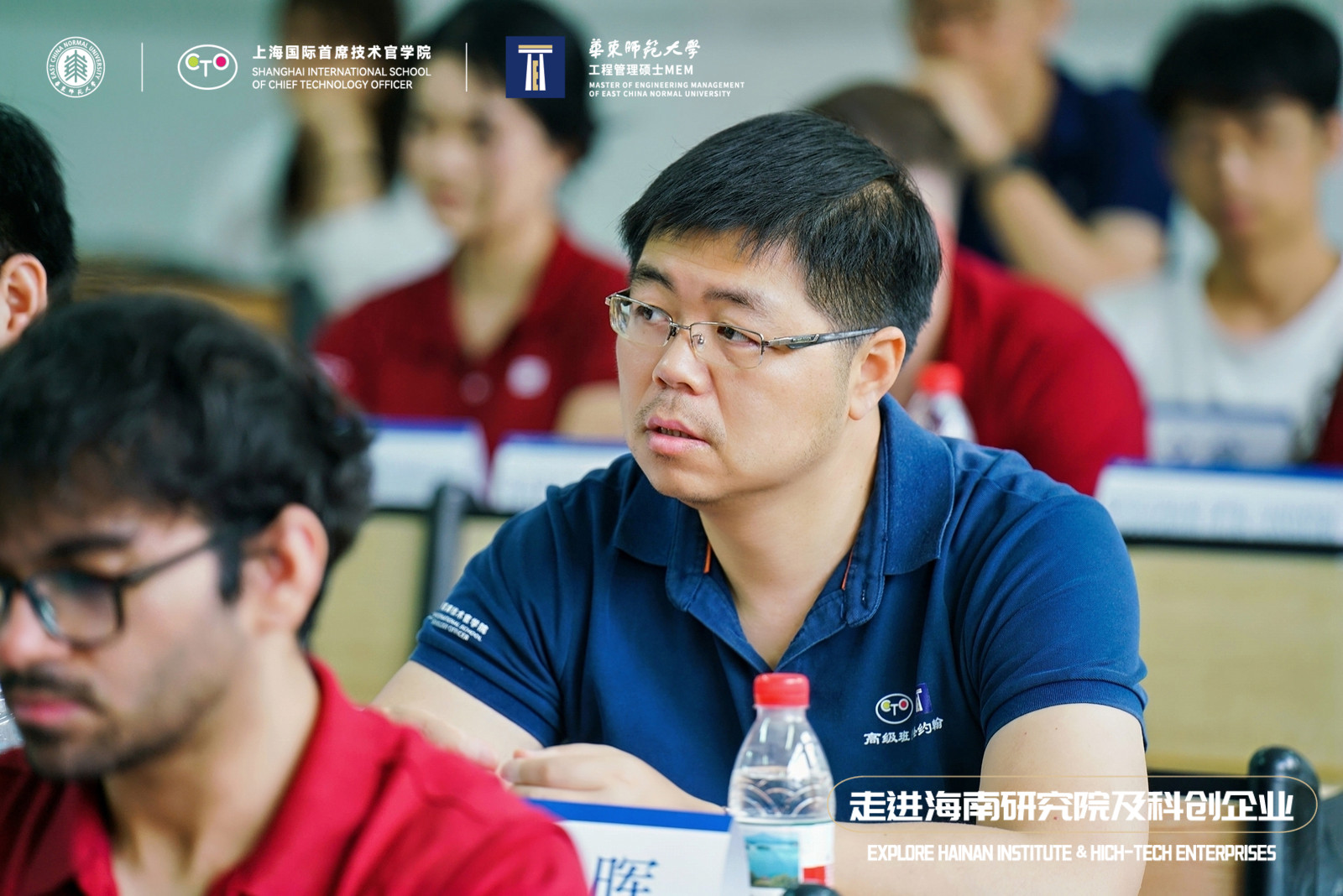
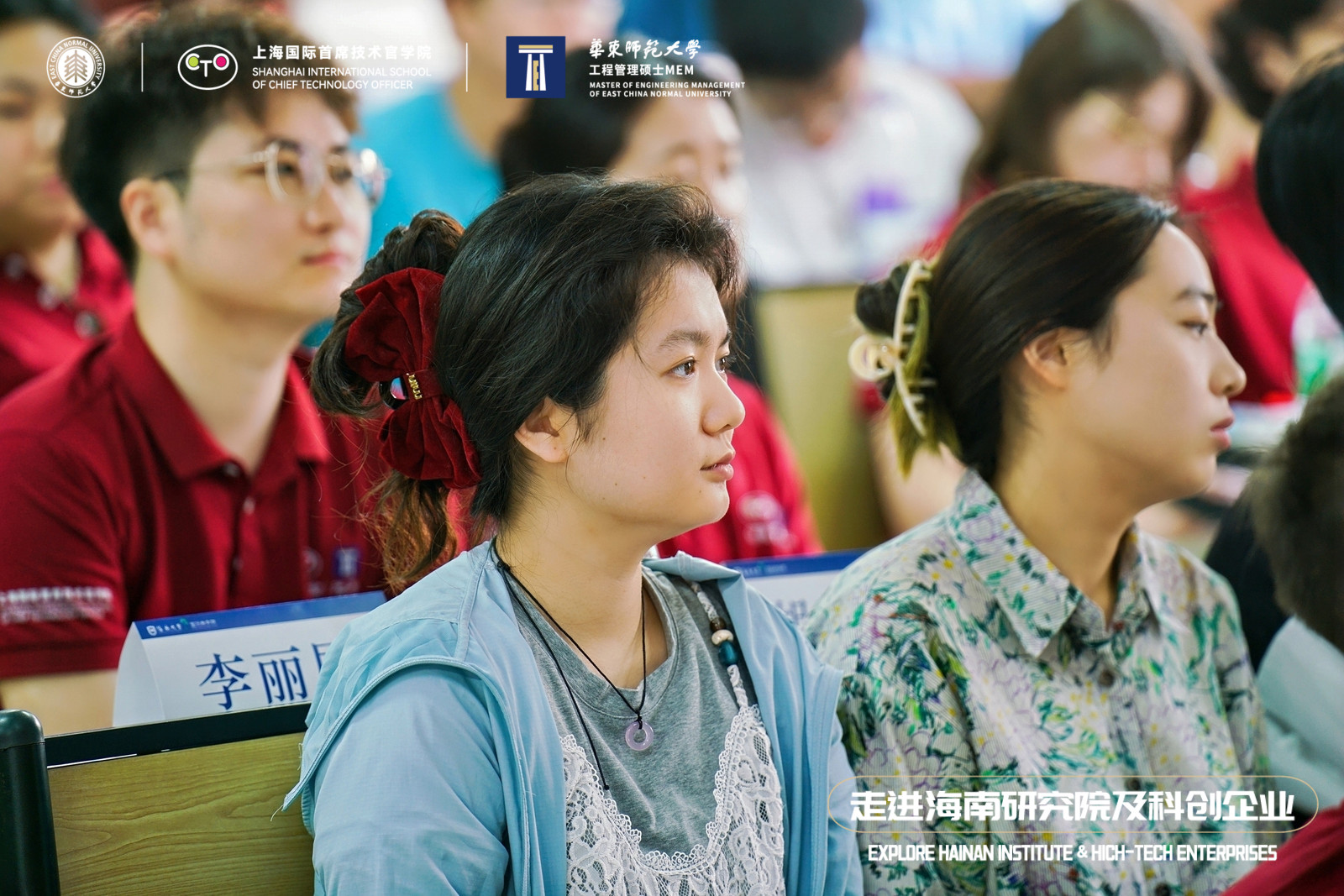
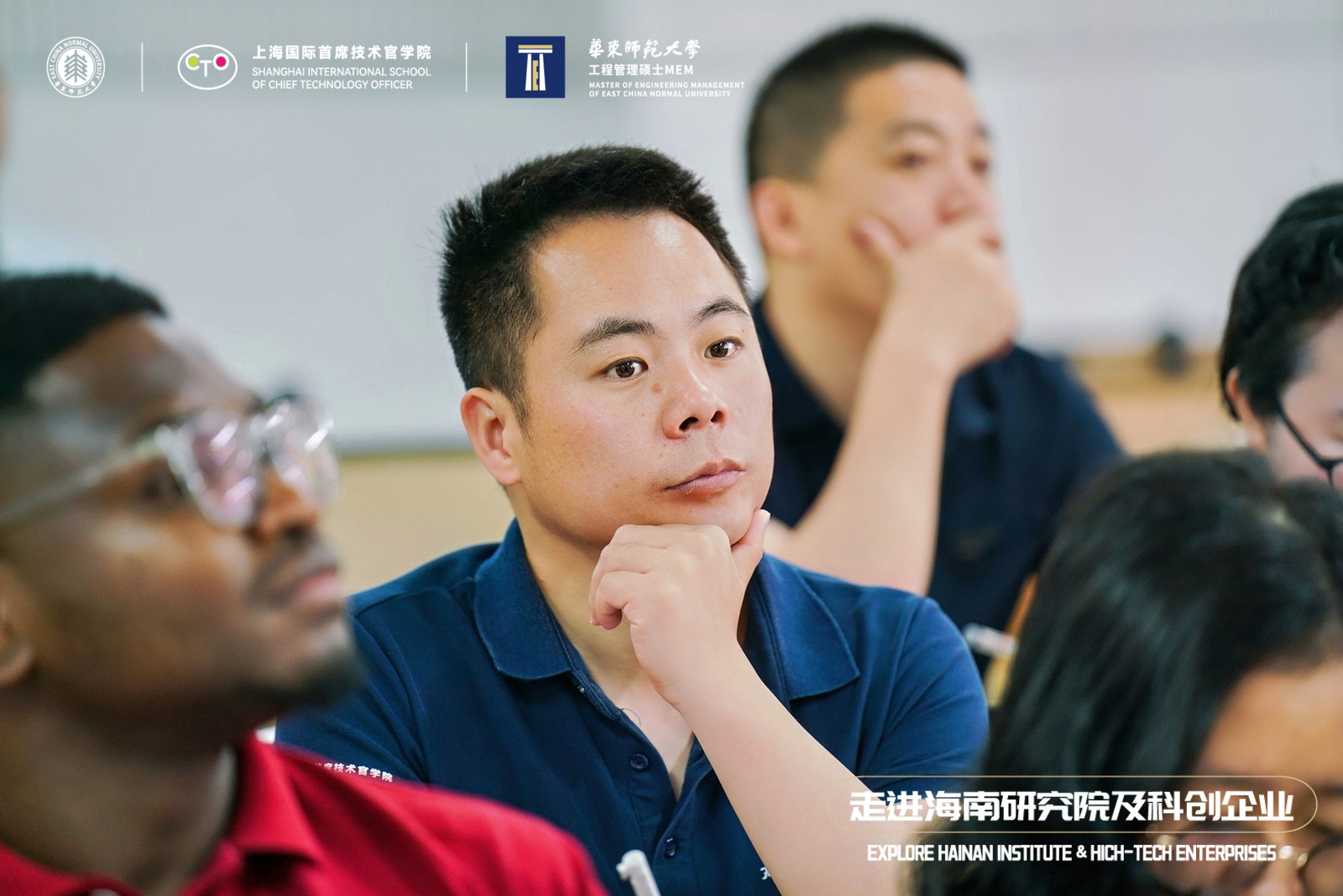
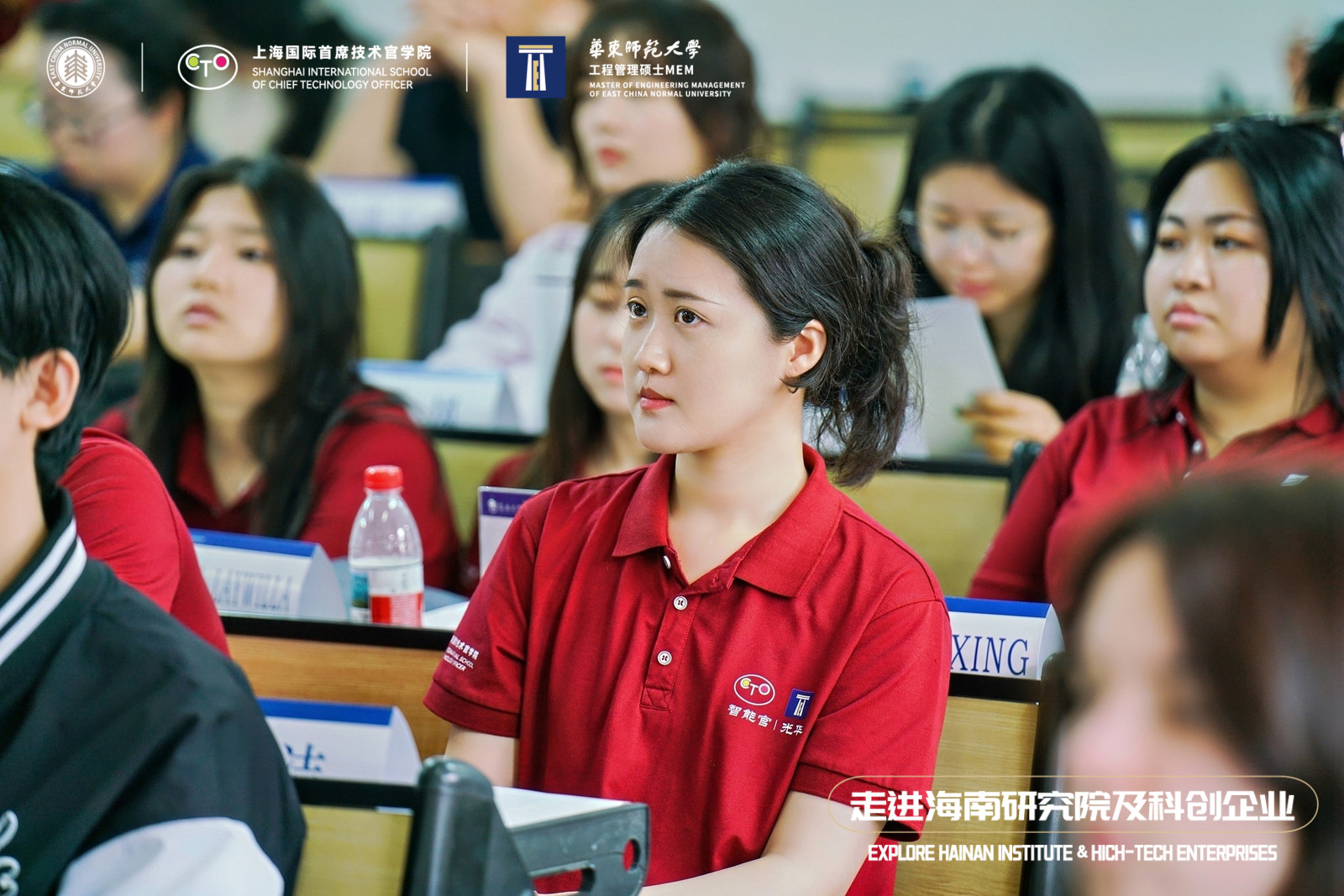
For international students, what is truly important is not simply “studying in China,” but whether they are able, through study, to understand a China that is real, multidimensional, and constantly evolving. The Hainan Free Trade Port, the Yazhou Bay Science and Technology City, and ECNU’s research platforms together form a vivid window into contemporary China’s development. What students witnessed there was not only technological progress and industrial upgrading, but also a China that is engaging the world in a more open, more confident, and more innovation-driven manner.
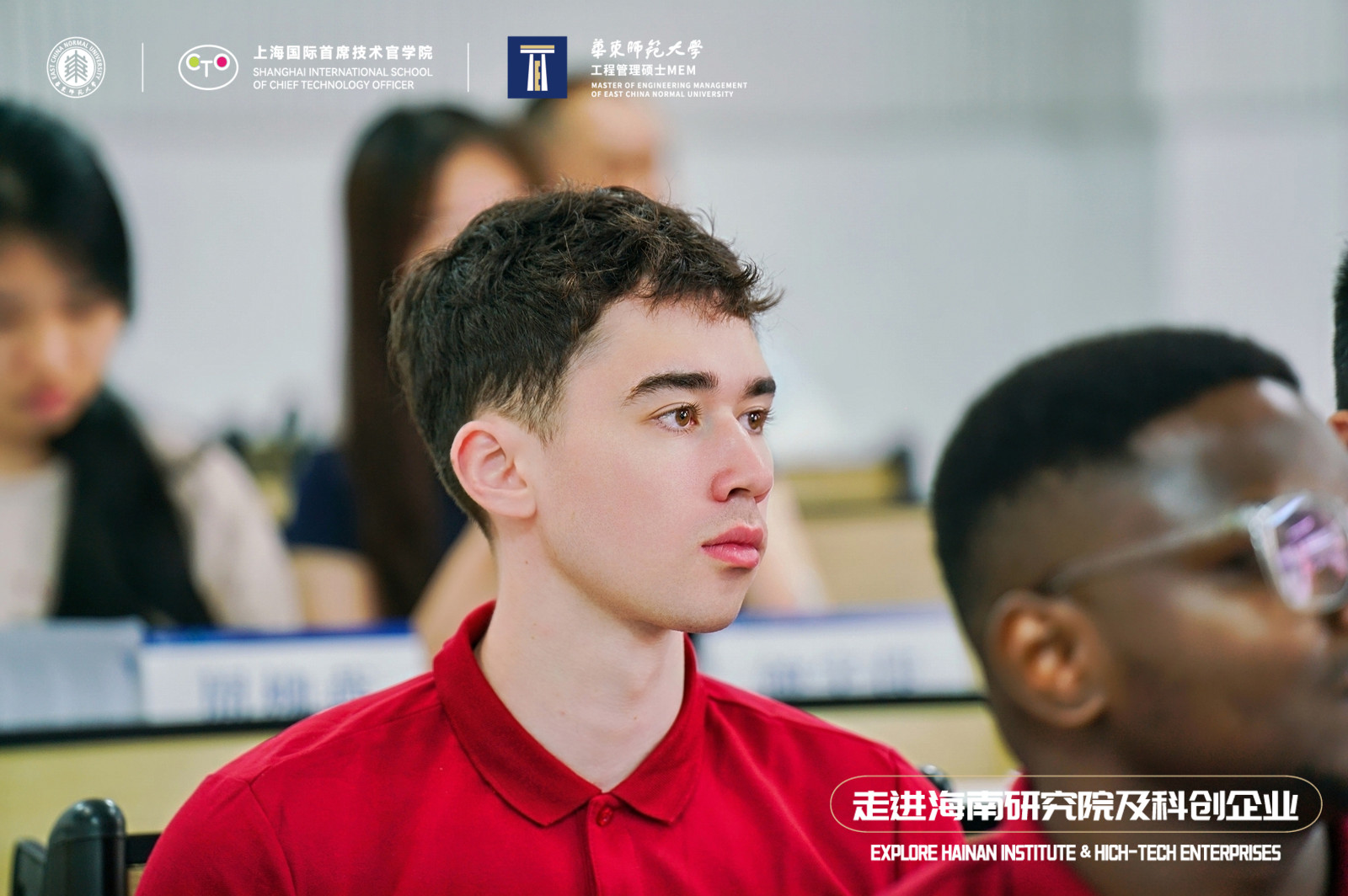
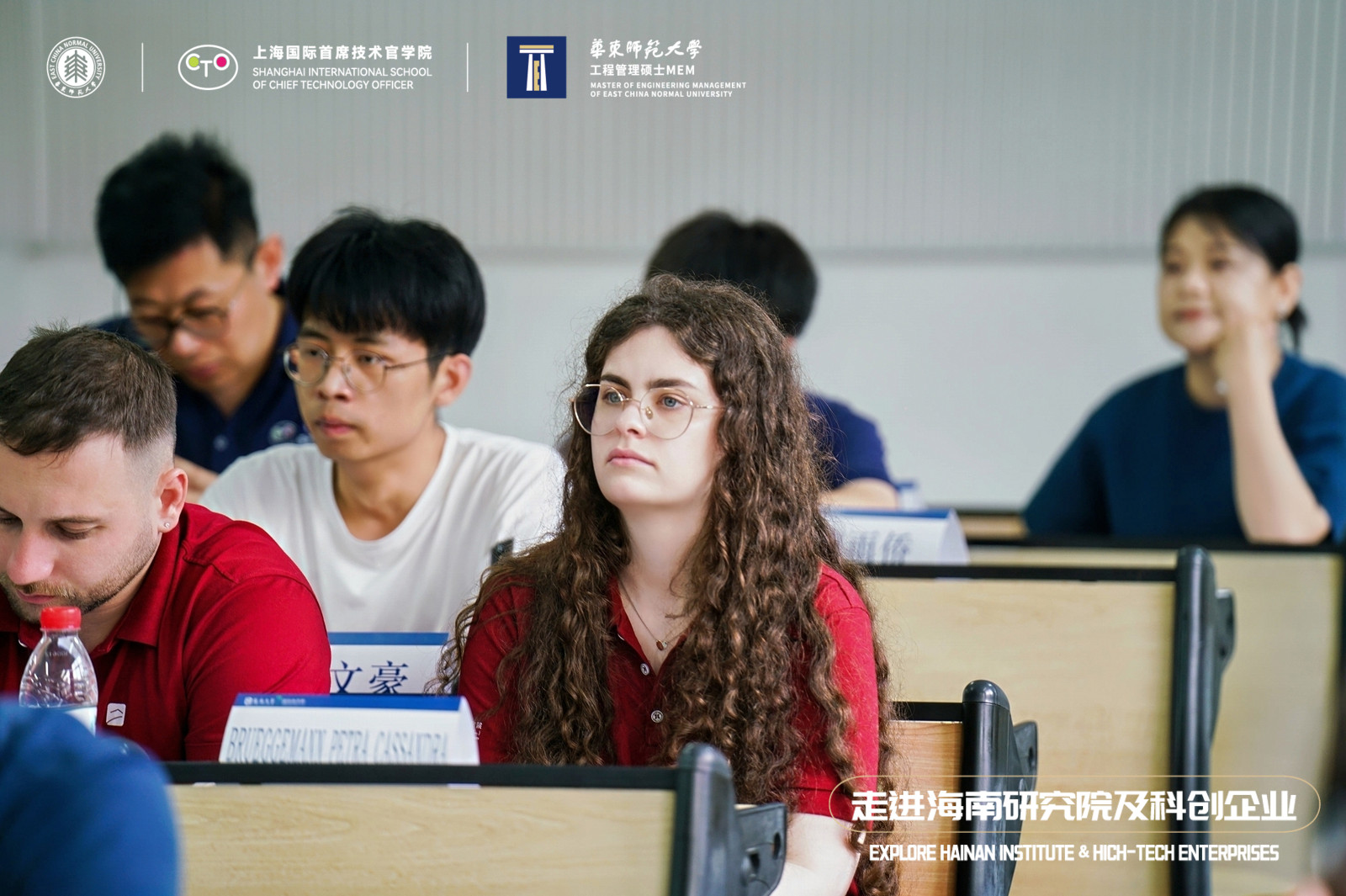
Looking Ahead
The world confronting business talent today has undergone profound transformation. Global markets are no longer merely spaces of transaction; they have become complex systems shaped jointly by technology, institutions, industry, culture, and the geopolitical environment. Whoever gains an earlier understanding of the logic of innovation, and whoever enters the frontlines of emerging industries sooner, is more likely to seize the initiative in future global cooperation and competition.
It is precisely for this reason that the value of business education increasingly lies not merely in cultivating those who “understand markets,” but in cultivating those who can understand China, understand technology, understand industry, understand cross-cultural cooperation, and build connections, promote collaboration, and create value in complex environments. AEBS’s organization of this Hainan field-based program for international students represents a response to this defining question of the times in a manner that is both more grounded in reality and more oriented toward the future.
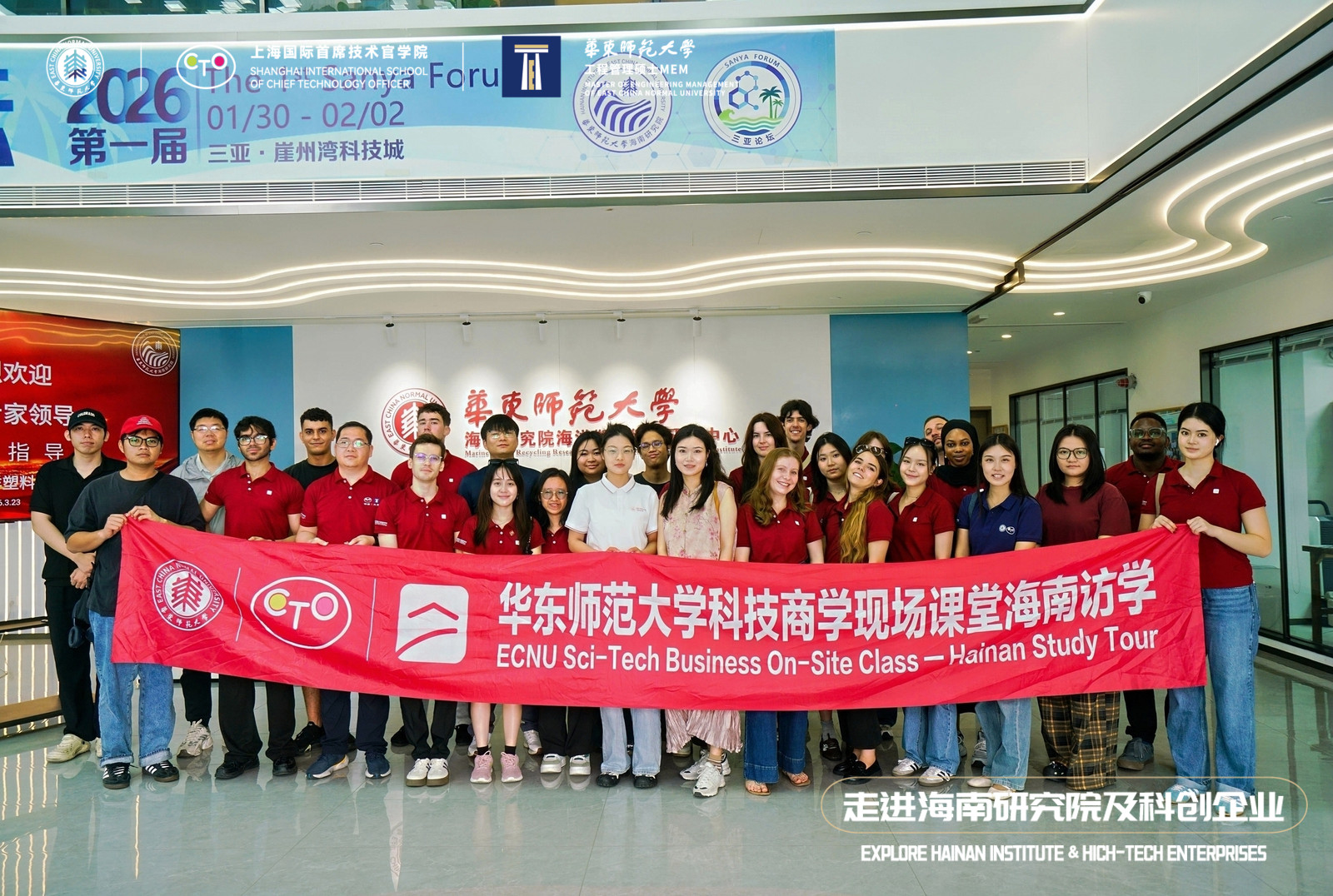
From Yazhou Bay Science and Technology City to the ECNU Hainan Research Institute, what this field-based teaching program opened up was not merely the boundary of a study visit, but a window through which to understand China’s opening-up and innovation. As the future gathers pace, openness, innovation, and cooperation are reshaping the ways in which the world is connected, and education, too, must evolve in advance of these changes. Its mission is not only to impart knowledge, but also to cultivate the capacity to understand a complex world; not only to remain within the classroom, but also to bring students into the real settings of China’s opening-up, scientific and technological progress, and international cooperation.
This journey to Hainan stands as a vivid expression of AEBS’s future-oriented educational vision: to understand China from a more international perspective, to connect with the world through a more open posture, and to cultivate, through authentic engagement with reality, talents capable of participating in the future and shaping it.亚欧多资讯吧!