



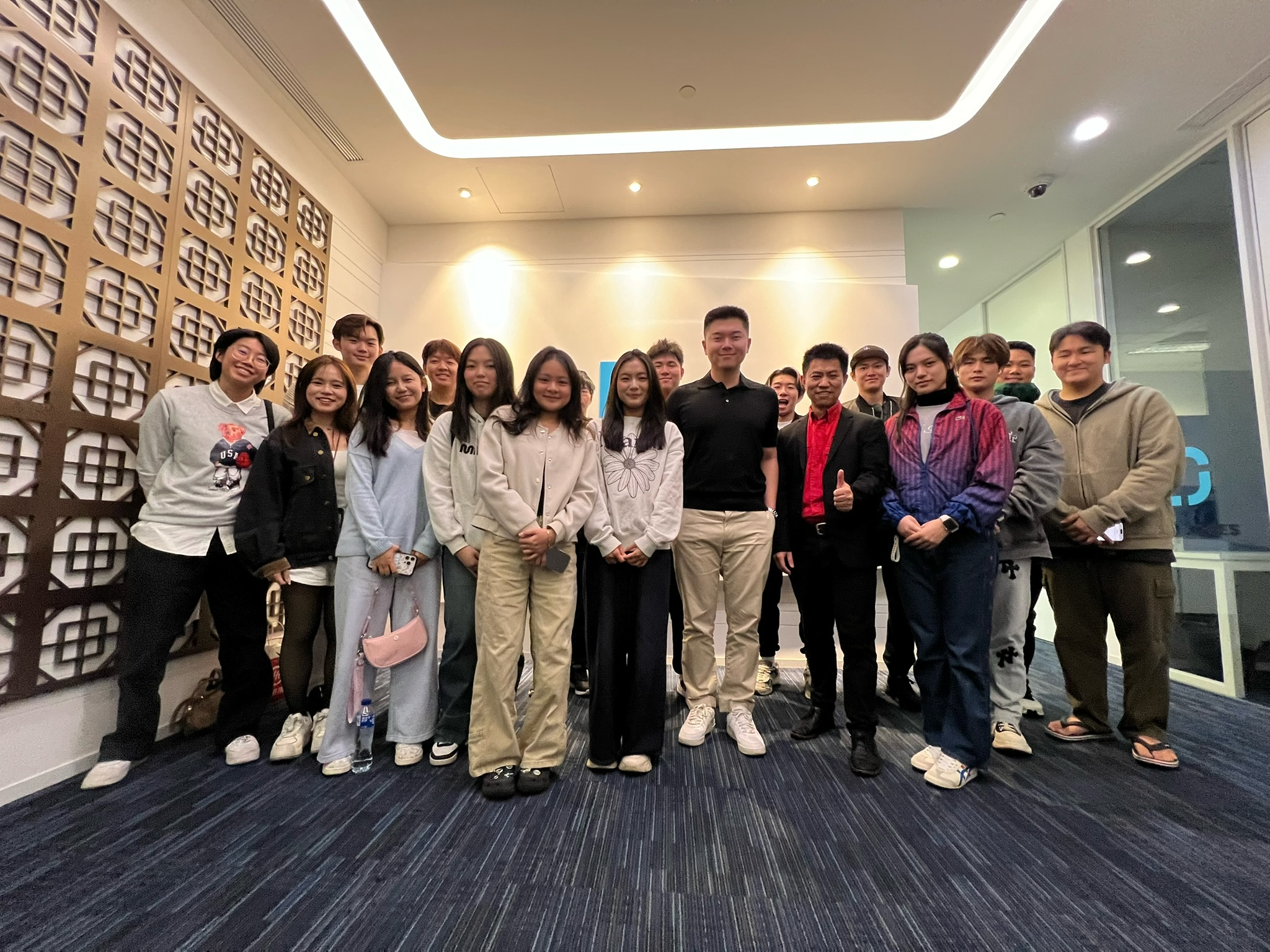
On October 31st, as a key component of the "International Marketing" and "Globalization and Geopolitics" courses, students from AEBS visited DowJones & Company under the Professor Pi Hongru. This century-old global business information institution, renowned for its cross-regional content customization and risk compliance services, provided students with a valuable hands-on learning platform.This century-old international business information organization, which is well-known for its risk compliance services and cross-regional content adaptation, gave students a useful platform for experiential learning.
By methodically comprehending Dow Jones' business model, product applications, and market development logic, students investigated important course subjects during the exercise. By concentrating on cross-regional operational strategies from "International Marketing" and fundamental concerns like risk control and compliance management from "Globalization and Geopolitics," they were able to obtain personal knowledge of how businesses actually apply these techniques. For both classes, this tour offered essential real-world case studies that deepened students' understanding of important ideas and prompted thoughtful views on international business practices.
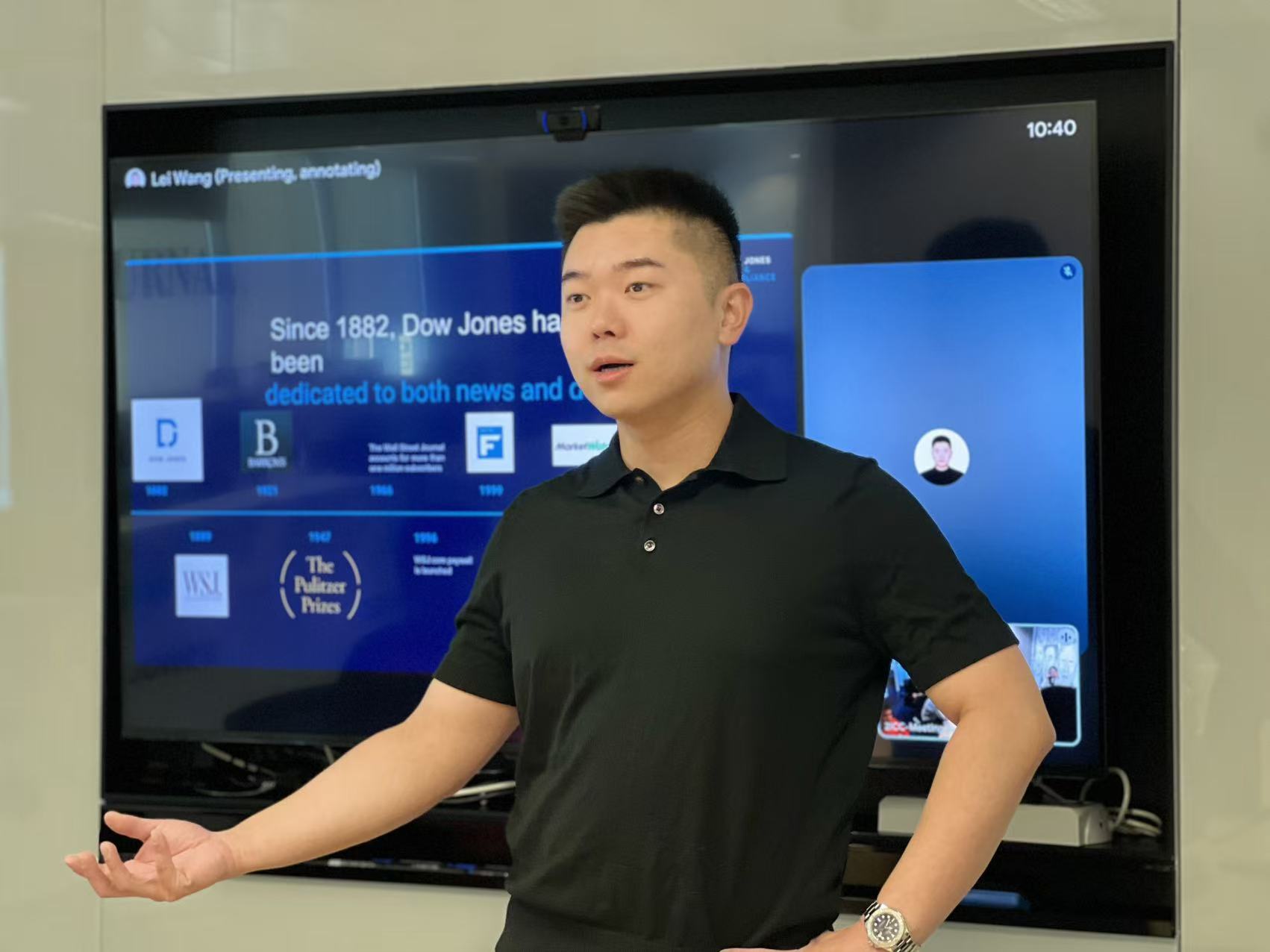
After a relaxed and pleasant ice-breaking session, Wang Lei, Manager of Dow Jones delivered a presentation focusing on the company's practices in global data services, risk monitoring, and international trade compliance. Centering on the core topics of the International Marketing and Globalization and Geopolitics courses, he explained in simple and understandable terms how multinational enterprises address legal, political, and cultural differences across various countries, as well as how to leverage data to drive business growth.
Mr. Wang specifically shared the core value of the subscription-based business model, emphasizing the importance of product repurchase rate for enterprises' sustainable development. Taking Dow Jones’s own business expansion experience as an example, he vividly illustrated the growth path from regional markets to global operations. In addition, through industry cases such as chips and new energy, he analyzed enterprises' response strategies in supply chain management, international sanctions and other aspects.
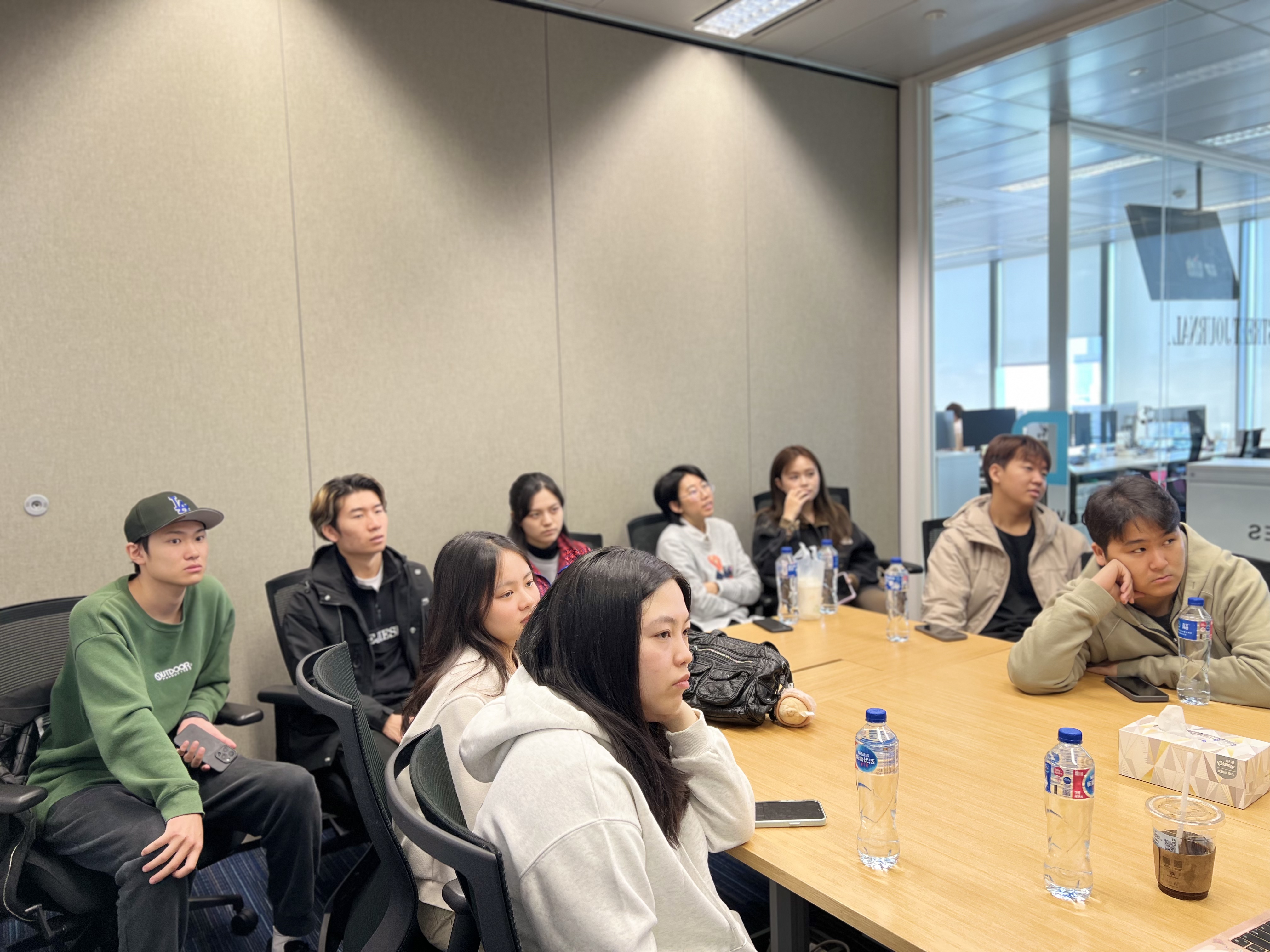
At this seminar, Mr. Wang conducted in-depth discussions with teachers and students on core risks that enterprises face in cross-border operations, including financial crimes, supply chain management, and international sanctions. He analyzed the complexity of financial crimes through money laundering cases, and combined with industry examples such as semiconductors and new energy, he examined effective strategies for enterprises to address supply chain disruptions and geopolitical restrictions. He also emphasized the importance of international compliance requirements and extraterritorial jurisdiction. Drawing from the company’s cases, Mr. Wang reminded the students that enterprises need to accurately identify counterparties and the nature of goods. For B-end customers, enterprises must clarify the problems their products solve; for C-end customers, they need to simplify information delivery. Meanwhile, by integrating data into business processes to implement daily risk scans, enterprises can effectively enhance product usage stickiness and repurchase rates.
At the end of the event, participants engaged in a free discussion, sharing their career intentions and observations on domestic and international markets, which further deepened their understanding of the operation of globalized enterprises. This visit not only enhanced students’ comprehension of the theoretical knowledge in their courses but also allowed them to gain first-hand experience of the operational practices of international enterprises. It provided valuable experience for cultivating business talents with an international perspective.
Student Testimonial
The most intense takeaway from today’s visit to Dow Jones was the sheer presence of this financial behemoth. Lei Wang walked us through what felt like “a chess game you can’t lose”—a fully established, refined system for financial information and consulting that’s already proven its mettle. One line from Mr. Wang really stuck with me: “A successful product has to drive repeat purchases; it needs to turn a slice of the customer’s revenue into ours.”
——HU ERIC ALESSANDRO
The Dow Jones visit was a very bonding one. The first thing I thought of was how capable the guy who gave us the presentation was, so I really wanted to concentrate on the whole thing. One thing that stuck in my mind was what he said: “If your company provides what everyone needs for their daily lives, your company is somehow a good one.” I learned how companies need worldwide information for their operations and how Dow Jones sells it to customers. Last but not least, I wish there were more experiences like this.
——NGWE HTET HTET LIN
The corporate visit brought me a lot of gains. Through on-site observations and explanations, I had a deeper understanding of the company’s operation methods and management philosophy. Compared with classroom learning, this on-site visit allowed me to experience the integration of theory and practice. Overall, this visit was extremely meaningful and also gave me new thoughts about my future career direction.
——YASUGAMI RIKU
Today’s corporate visit gave me a deeper understanding of enterprise risk management. Through the explanations, I felt the close connection between theoretical knowledge and practical work. In particular, seeing the integration of data analysis and compliance management helped me recognize the important role of technology in business. This experience not only broadened my horizons but also gave me new thoughts about my future career direction.
——TAKAHASHI TAIYAN
I visited Dow Jones today and gained an understanding of its important position in the global financial market. Through the explanations, I developed a clearer insight into how Dow Jones reflects changes in the U.S. economy. In particular, learning about the economic impact of its component companies made me realize there are numerous complex factors behind stock market fluctuations. This visit has sparked a greater interest in the financial sector within me, and I hope to explore this field in more depth.
——LIN SUMI